
My Dream Job?
An Exploration into Human Experience Design
Artificial Intelligence cannot properly curate the vibes. No matter what the algorithm says.
Real talk: I’ve never once dreamed of labor so the phrase “dream job” is a bit of an oxymoron to me. A job, however, is a means to freedom and freedom is something I dream about often. Not freedom from work but freedom within it—the autonomy to do things that matter to me, to be compensated for both vision and execution. In my world, work is viewed as an expression of purpose rather than an extraction of time. And if I’m going to spend 1/3 of my life doing anything, I want it to be meaningful to me.
At the social events I host, I watch successful people deflect questions about what they do for a W-2 all the time. Similar to the ways in which having a boyfriend has become embarrassing, so has labor. But having money is not. Answering the question “so, what do you do?” invokes a cringe akin to smelling a foul odor. Because, as it turns out, we no longer desire to be defined by our jobs but rather want to be recognized for our passions and purpose. At my events, in my studio, and at any other social gathering, really, I see people deflect questions about their jobs or how they earn a living with mentions of their passion projects instead.
It’s easy for me to recognize that discomfort because I’ve lived it. But after building a business that has given me creative autonomy (and rewarded me for it), I'm ready to explore beyond the beauty space. I want to scale human connection inside organizations that shape culture. This isn’t exactly a pivot. I’ve been having talks behind the scenes with a few key players across HR, Product, Growth, and Events. None of them are surprised by my background (because they already know me) but they are surprised that I’m the first person they’ve ever heard mention the phrase “human experience design” in a way that is totally disconnected from a digital realm.
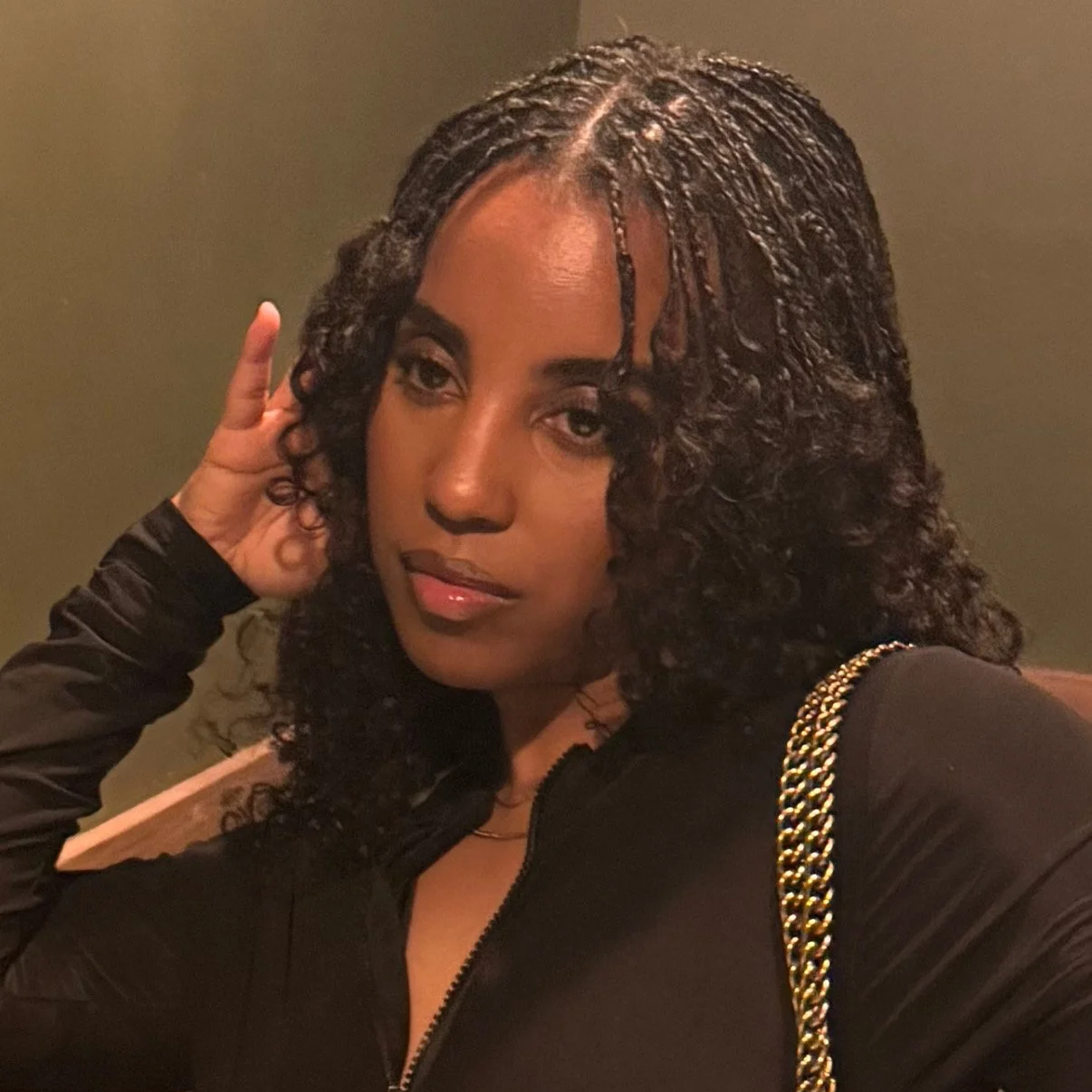
Hadiyah, the Human Experience Designer
Human Experience Design is not a new title. Since at least 2016 (maybe earlier?) it has been an evolution of the User Experience Design role—tied to design aesthetics, usability, features, and overall how a user may interact with a digital interface whether that be a website or an app. But *my* version of Human Experience Design focuses entirely on the offline world. Bringing the URL to IRL.
I’ve dabbled in this before (to an extent). Before I started Fairy Glow Mother and Glowdega, I was at a marketing services firm that helped major technology clients create field experiences for sales enablement teams. That’s a lot of words that just means my team built some unique booths for CES, VMworld, and other high-tech B2B conferences and tradeshows. And that wasn’t even the main function of my job at the time—they were one-off client requests that my team and I just so happened to deliver on. But I’ve been thinking of ways I could create similar experiences outside of B2B ever since. What does it look like to create a meaningful hiring experience? How can national consumer brands connect with their customers that don’t involve sponsoring an event? What is the best way for local brands to connect with the surrounding community without commerce?
And, of course, I’ve come up with a few solutions too. Below are a few examples of scenarios that might benefit from my idea of Human Experience Design.
Happy Hiring Hour
The hiring process has become a theater of mutual deception. Companies post roles they might not even fill, candidates spray applications into the void, both sides perform scripted interactions through five rounds of interviews (plus a project!), and somehow everyone ends up disappointed. We've created a system where the least authentic version of a person meets the least authentic version of a company—hundreds of hours wasted, ghosting as standard practice, and matches that fail because nobody ever met the real version of anyone else.
Happy Hiring Hour strips this back to its essential question: do these humans want to build something together? Companies host experiences during traditional happy hours (usually 3pm-7pm) designed around their open roles. Interested candidates RSVP to attend—no resumes required, just the intentional choice to show up. During the event, attendees engage in small group activities that mirror the actual work: a creative agency might run rapid-fire design critiques, a data company could host a prediction market game. These aren't skills tests but contexts where natural problem-solving styles and cultural fit become visible. The radical part is that invitations to apply only come after mutual interest is established at the event. This completely inverts the traditional funnel—instead of narrowing 200 paper candidates to meet five people, you meet 30 people who cared enough to show up and pursue five on paper. The RSVP becomes the first signal of genuine interest, the physical meeting becomes the first filter, not the last hurdle.
Tubi Film studies
I’m genuinely a fan of media. Music, television, film… I love it all! So it’s not surprising that my undergraduate degree is in Mass Media Arts. But, being a fan of more highbrow media, it is surprising to my friends just how much I love Tubi. You see, Tubi has a bit of a reputation for being the streaming platform for low budget, bad quality media. But, I disagree and think Tubi is so much more. For a free streaming platform, Tubi frequently houses hundreds of film and television classics—often titles that you can’t find on other platforms. Plus, Tubi is a champion of independent media. It just seems like not enough people know about this.
Given the current state of media literacy in this country and the importance of understanding filmmaking with the rise of social video platforms, Tubi could benefit greatly from hosting free film studies programs in key markets. What might this look like? All Tubi viewers could sign up for film studies and get a curriculum of films, television shows, and commentary to review on a bi-weekly basis. Once a month, Tubi can host in-person talks (Tubi Talks?) with filmmakers that gives the Tubi community a chance to discuss what they’ve learned and connect with their “classmates”. This gives viewers a chance to engage with Tubi beyond the screen, strengthen Tubi’s offline community, and position Tubi as more than their low-budget offerings.
This is also an opportunity to up their advertising game. I’d love to see them partner with brands and agencies to create premium ads for the films and shows within the curriculum. And for in-person experiences, Tubi should flex their muscle (or wallets) a bit to bring in known fillm/television stars and directors to lead the talks.
Local Love
Business know a lot about their customers. They know their spending habits, what they prefer to spend their money on, where they live, how they prefer to receive communication and so much more. But do they really know who the human is behind the purchase? Probably not. Local Love flips the traditional brand-to-consumer dynamic by turning customers into the stars of the show.
A bookstore might create "Blind Date with a Reader" where customers pitch why everyone should read their favorite obscure book, but plot twist—they can only use interpretive movement, drawings, or charades. The audience votes on which book to feature for the month. A pilates studio might set up a night of “Core Confessions” where members share what ridiculous things they're actually thinking about during hundred counts (plotting novels, planning revenge, composing emails to their ex). Or "Reformer Karaoke" where people have to maintain perfect form while belting out power ballads—breaking form means passing the mic.
Local restaurants might be able to have the most fun with this concept. There could be a dinner series where diners compete to share their most catastrophic first date tales between courses. The table with the most votes gets their meal comped for the night. Or "Yelp Review Roast" where staff and regulars do dramatic readings of the restaurant's wildest one-star reviews.
We Outside!
These ideas aren't about apps or ads but the three-dimensional, sensory, emotional journeys that happen when humans actually share space. Every company talks about community, but most are still trying to build it through screens. As a Human Experience Designer, I translate corporate objectives into cultural moments—the kind people choose to attend, remember, and tell stories about. In an age where AI can replicate almost any digital interaction, the competitive advantage isn't better chatbots or smoother UX. It's knowing how to orchestrate those irreplaceable analog moments where brands stop being logos and become part of people's actual lives.
And, I can’t front, it’s about having the eye for design and aesthetics to pull these events off. Just a little bit.
This is the freedom I'm after: work that matters because it creates experiences that matter. If this piece resonated with you in any way or if you’d like to work with me, feel free to contact me!
